March Studio Blog
March studio notes
March Studio Notes — Walking Into the Light 1st March
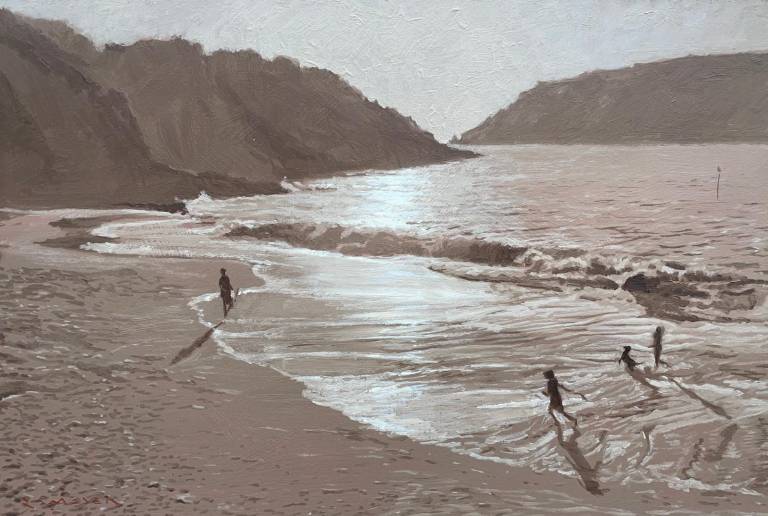
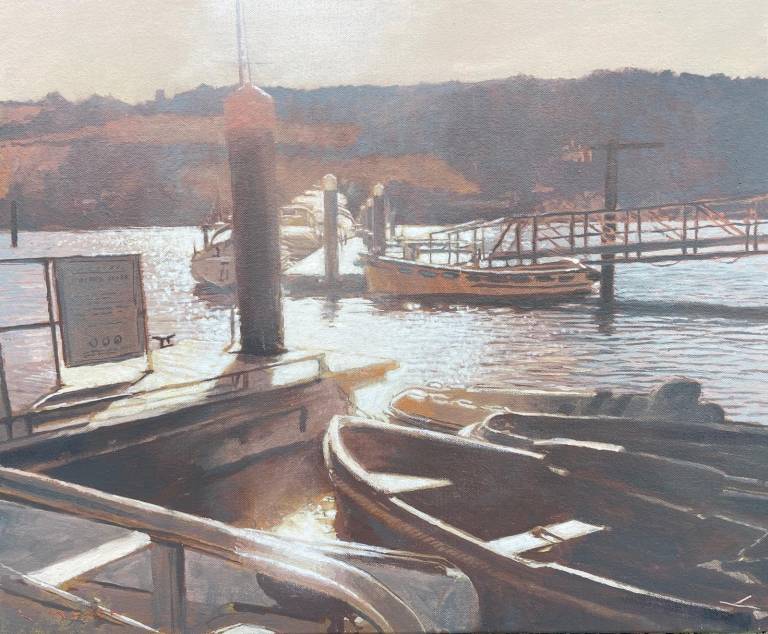
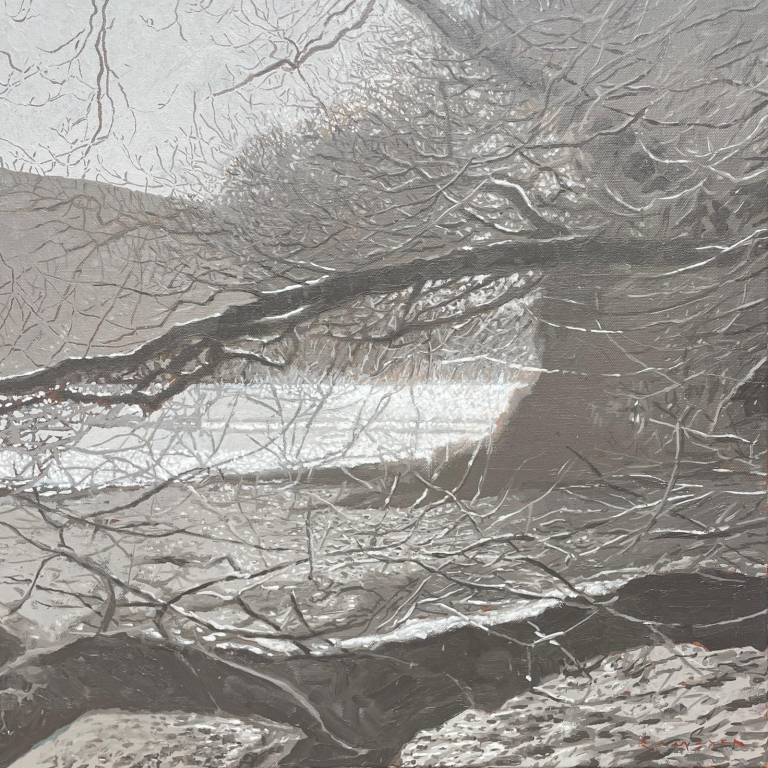
Yesterday’s sunshine pulled me out for one those wonderful pre spring walks. I went out with a fixed plan to find a place where I could look into the light across the dart estuary in the moment when the sun sits low enough that everything becomes silhouette and shimmer. The water was bright, almost broken into fragments of silver, and the figures and branches in front of it seemed to dance in that reflective haze. It’s a kind of visual music I never get tired of.
As I walked, I made small sketches little thumbnail notes, really just enough to catch the bones of what caught my attention. Mostly dark shapes against the glare. These quick marks help me understand what I’m actually responding to, what the landscape is offering beneath the obvious beauty.
I also took photographs, as a way of remembering the emotional temperature of the moment. The photos hold the light, the contrast but not the atmosphere the things that fade quickest in memory. I find the inspiration only lasts a few days.
This morning I went through the photographs and chose three that still carried the feeling of yesterday. I translated them into alcohol‑marker drawings, mixing them with the sketches I made on the walk. The drawings help me strip everything back to essentials shape, rhythm, contrast, but mostly the flow of light across water. They’re a bridge between the immediacy of the walk and the slower, more deliberate pace of the studio.
On Monday, I’ll take the strongest of these studies and begin turning it into a painting. That’s the part I love most pulling together the walk, the sketches, the photographs, the memory of the light, and letting them settle into a single painting. A few days of quiet work to bring all those elements into one final piece.
March begins with sunlight, silhouettes, and the promise of a new painting a reminder that inspiration often starts with simply stepping outside and paying attention.
March Studio Notes — Drawing From Yesterday’s Light
Today’s studio session was all about pulling yesterday’s drawing fragments around the silhouettes of trees and rocks. It was the feeling of that moment I wanted to draw out.
I started by laying down a ground in alcohol markers, a soft mid‑tone that would hold the space between the reflective water and the sky above the trees. Once the mid value was in place, I blended it with rubbing alcohol, letting the edges soften and bleed just enough to recreate that hazy brightness you get when looking into the light.
With the mid‑tone settled, I moved to the highlights. A white liquid‑paper pen is perfect for this crisp, immediate, and slightly unpredictable. I picked out the flashes of reflected light on the foreground rocks, the thin bright spaces between branches, the small glints that sit on the surface of the water. Those marks brought the drawing to life almost instantly.
To anchor everything, I added shadows beneath the highlighted rocks and Just a few darker strokes, but enough to give weight and depth, enough to let the light feel like it was truly sitting on top of something solid.
March Studio Notes - On Letting the Background Hold the Light March 12th
Today I understood something about the backgrounds in these new paintings. They can’t sit too dark or too light, they have to live close to the mid‑value. That middle ground is what allows the painting to breathe. If the background sits in that quiet centre, I can leave openings, small passages where the underlayers shine through. The painting feels more alive when the light isn’t forced but allowed.
With the background anchored in the mid‑range, the work becomes simpler and more focused. I only need to paint the shadow and the highlight. Everything else is already there, waiting. The next few paintings will follow this structure: a mid‑value field, then the two essential marks the dark that shapes the form and the light that reveals it.
It feels like a small shift, but it changes everything. The painting becomes less about filling space and more about letting the right things remain open. The light arrives because I’ve left room for it.
March Studio Notes — On Losing the Light
Today I realised something so simple I almost missed it: I’ve been painting with too few values. Not intentionally, more out of habit, or speed, or the quiet assumption that five steps were “close enough.” But they aren’t. Not for what I’m trying to hold.
With only five value pools, the jumps between them become too big. The transitions flatten. The light slips away in those gaps. I’ve been leaping instead of stepping, and the painting shows it, the subtle shifts I rely on just aren’t there.
Eight values have always been enough for me: a full scale, a gentle ladder from dark to light. But recently I’ve been mixing fewer pools, rushing the middle tones, letting the structure loosen. And when the steps between values widen, the light collapses. It doesn’t matter how carefully I place the highlights if the rungs beneath them are missing.
So today is a reset. Slowing down. Mixing the full range again. Rebuilding the value scale with intention, not assumption. It’s a small correction, but it feels like opening a window, letting the light back in through the steps that support it.
March Studio Notes — Rising Light, Rising Energy
There’s a new energy moving through the days now. Sunshine, warmth on the skin, birdsong threading through the mornings. The trees are full of small promises buds tightening, colour gathering, everything leaning toward growth. It’s subtle, but it changes the way I move in the studio.
With this lift in the season, I find I can work bigger again. Meter‑wide canvases don’t feel heavy or demanding; they feel possible. The light outside seems to translate into a kind of internal momentum, a quiet push forward. New growth in the landscape, new scale in the work, both arriving at the same time, both carrying that early‑spring sense of expansion.
March Studio Notes — Returning to the Centre
Meditation seems to be drifting back to the centre of my work again. It’s strange how the things I explored all those years ago at university keep resurfacing, the tracing of pattern, the wonder of imprint, the quiet attention to the smallest shift. I felt it strongly this morning.
I tried to walk slower, deliberately slowing my pace until each movement felt almost suspended. Fast living makes you miss so much slowing down reveals everything. As I walked, I found myself thinking about movement on a larger scale. My body moving through the landscape, the Earth orbiting the Sun, the whole solar system spiralling through the galaxy, all of it drifting through endless space. That vastness opened up around me.
And then, in the same breath, something tiny pulled me back light catching on a new bud on a single tree, on a single branch. Water bubbling beside me. A bird singing somewhere out of sight. The March haze hanging in the air. The contrast between the infinite and the intimate gave me a frisson across my skin the same sensation I remember from those early university days, contemplating similar ideas with the same quiet awe.
It feels like a loop closing. The work I’m making now is connected to the work I made then, not through style but through attention the same desire to notice, to slow down, to let the world imprint itself. Meditation isn’t separate from the practice it’s becoming the ground of it.
March Studio Notes — The Work Beneath the Work
Through the winter I’ve been experimenting in the studio, pushing at the edges of my practice without really knowing where any of it was heading. Colour shifts, strange textures, paint pushed thick and then thinned to nothing, glazing over and testing homemade mediums I’d never normally reach for. Most of it remains unfinished half‑formed pieces, abandoned panels, marks that didn’t quite land.
But lately I’ve noticed something unexpected. Those winter experiments are resurfacing in the new paintings, not as whole ideas but as small passages, tiny sections where the earlier work rises up through the current one. A bit of colour logic I tried in December. A texture test from a cold morning in January. A glaze that only made sense months later. It’s happening almost subconsciously, as if the work stored itself somewhere and is now feeding back into the paintings without me forcing it.
It’s wonderful to see, and a reminder that those so‑called failures weren’t failures at all. They were the real work, the groundwork, the compost, the quiet layer beneath everything I’m doing now. The unfinished pieces weren’t dead ends; they were seeds. And now, in March, they’re beginning to show their fruit.
March Studio Blog - Balancing the Two Sides of Practice
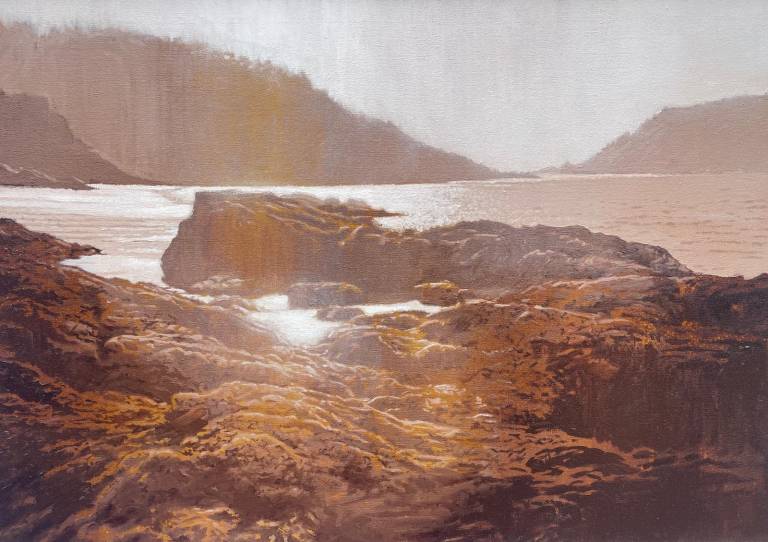
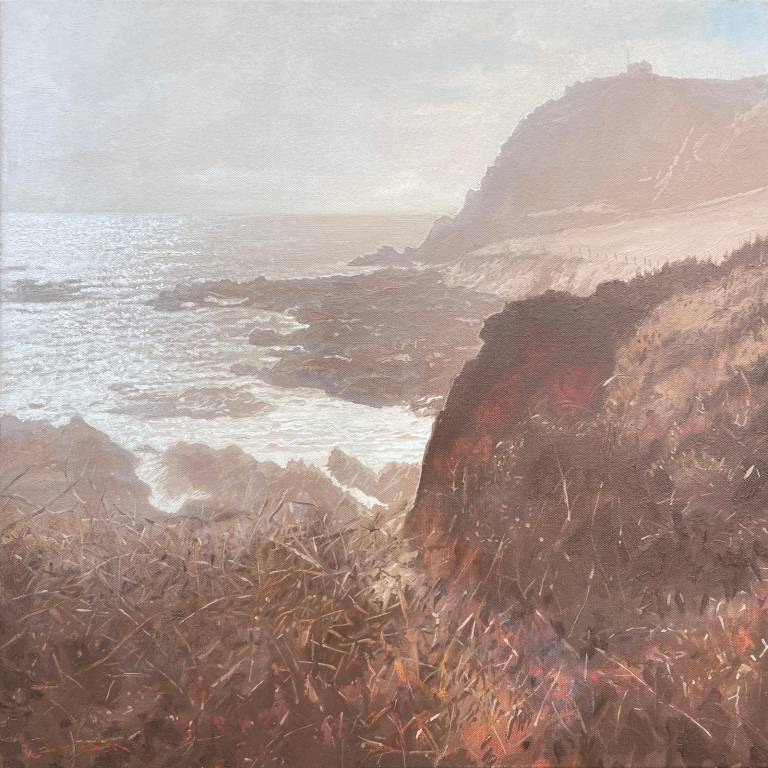
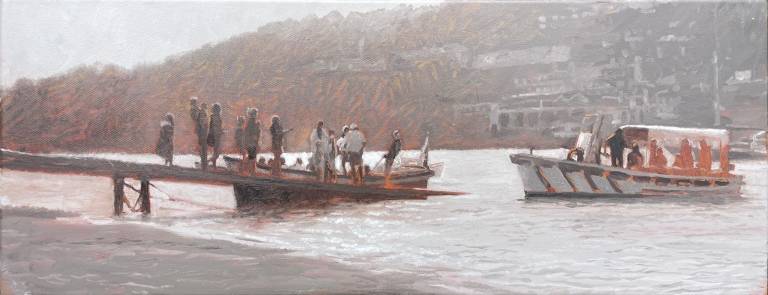
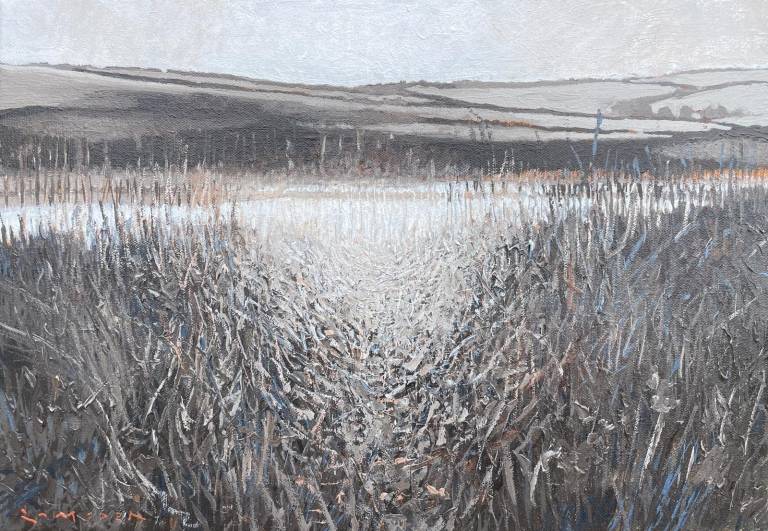
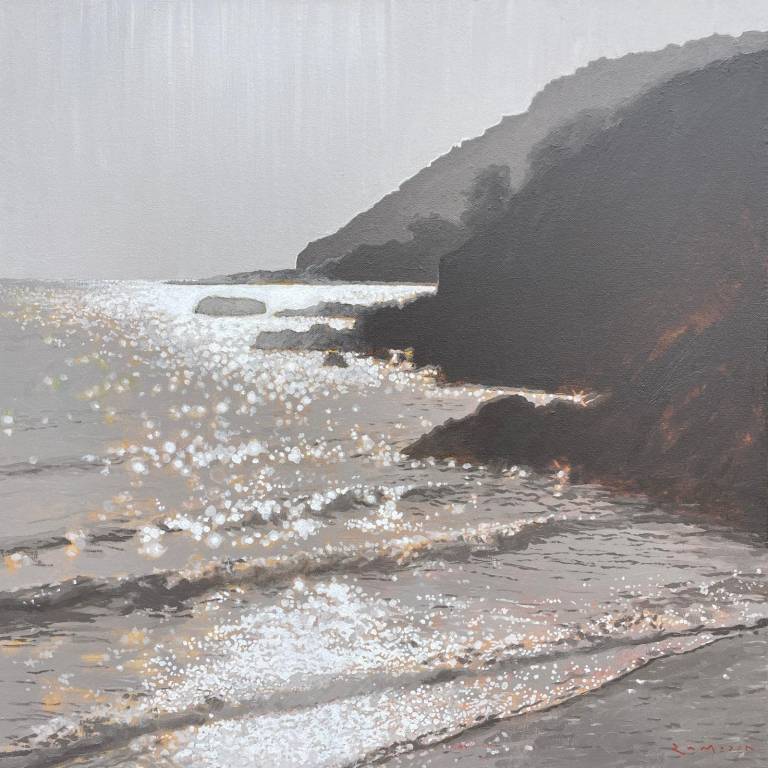
As March draws to a close, I find myself looking back over the month’s work and noticing how naturally it has gathered itself into the shape of the upcoming Easter exhibition, a body of paintings rooted in coastlines, estuaries, and the quiet transitions between land and water. What began as scattered experiments has slowly cohered into something with its own internal tide, its own pull.
But as I trace the arc of the month, I’m reminded again of the two sides of my practice that I’m always trying to balance.
There is the side that plays.
The side that wanders, picks at ideas, follows threads without knowing where they lead. The side that allows failure to enter the studio. This is the part of me that works quickly, loosely, without expectation, the part that trusts that even the abandoned pieces, the half‑formed marks, the strange detours, are all part of the deeper movement of the work. These experiments rarely announce their purpose at the time. They simply accumulate, forming a quiet undercurrent beneath everything else.
And then there is the other side.
The side that builds a closed framework a structure strong enough for finished paintings to emerge. This part of the practice is slower, more deliberate. It asks for clarity, for boundaries, for decisions that hold it takes time to solve problems in paint It’s the side that shapes an exhibition, that gathers the fragments and gives them a place to land. Within this framework, only small elements of the exploratory work are allowed to enter, and even then, they do so gradually, almost shyly. A colour from a discarded study. A glaze from a failed composition.
This month has been about letting these two sides speak to each other.
The estuaries and coastlines I’ve been working with seem to mirror this duality the open, shifting edge where ideas flow freely, and the more defined channels where the water gathers itself and moves with purpose. One side feeds the other. One side steadies the other. Without the play, the finished work would feel thin. Without the framework, the play would never find form.
As the exhibition approaches, I can feel the work settling into its own balance. The pieces carry traces of March’s experiments, but they also hold the quiet discipline required to bring them into being. It’s a rhythm I’m learning to trust the ebb and flow between openness and structure, between wandering and arriving.
And perhaps that’s the real work of the studio: learning to hold both sides at once, and letting the paintings emerge from the space between them.
March Studio Notes - On Being the avent guard
As March closes, I’ve been thinking about something I heard recently the idea of artists as the vanguard. Not the old avant‑garde of manifestos and rupture, but a quieter, more perceptive role that feels truer to the world we’re working in now.
In 2026, culture moves fast, noisily, and often without depth. Everyone is producing, reacting, broadcasting. Very few are actually paying attention. And that’s where the artist’s work begins.
The avent guard today isn’t the one who shouts first.
It’s the one who notices first.
Artists sense the subtle shifts long before they become visible: changes in mood, new forms of longing, the emotional weather gathering at the edges of things. We feel the tremors before they become headlines. We read the atmosphere in people, in landscapes, in the small movements of daily life with a kind of tuned‑in sensitivity that isn’t dramatic, but is deeply necessary.
This sits close to the two sides of my own practice: the exploratory side that plays, fails, listens, and follows threads; and the structured side that shapes those early signals into finished work. One side feels ahead of time, the other translates that feeling into form.
Perhaps that’s what it means to be the vanguard now:
to stay awake in a world that’s half‑asleep,
to sense what’s forming beneath the surface,
and to let the work emerge from that quiet, attentive place.